
UAE farmers face a tough choice between vermicompost and chemical fertilizers as they work to grow crops in one of the world’s most challenging agricultural environments. With water scarcity, extreme heat, and sandy soils creating unique obstacles, choosing the right fertilizer can make or break your farm’s success and bottom line.
This guide is designed for UAE farmers, agricultural consultants, and farm managers who need practical answers about fertilizer options that actually work in desert conditions. We’ll break down the real-world performance of both vermicompost UAE and chemical fertilizers UAE farming operations rely on.
You’ll discover how vermicompost vs chemical fertilizers stack up in three key areas. First, we’ll compare their environmental impact in UAE farming systems, including effects on soil health and water conservation. Next, we’ll analyze the economic costs and UAE farm profitability potential of each option over time. Finally, we’ll share practical implementation strategies that help UAE farmers successfully adopt whichever approach fits their operation best.
The desert doesn’t have to limit your farming success – the right fertilizer choice can help you build sustainable agriculture UAE producers depend on for long-term growth.
Understanding Vermicompost Benefits for UAE Agricultural Conditions
Enhanced Soil Water Retention in Arid Climates
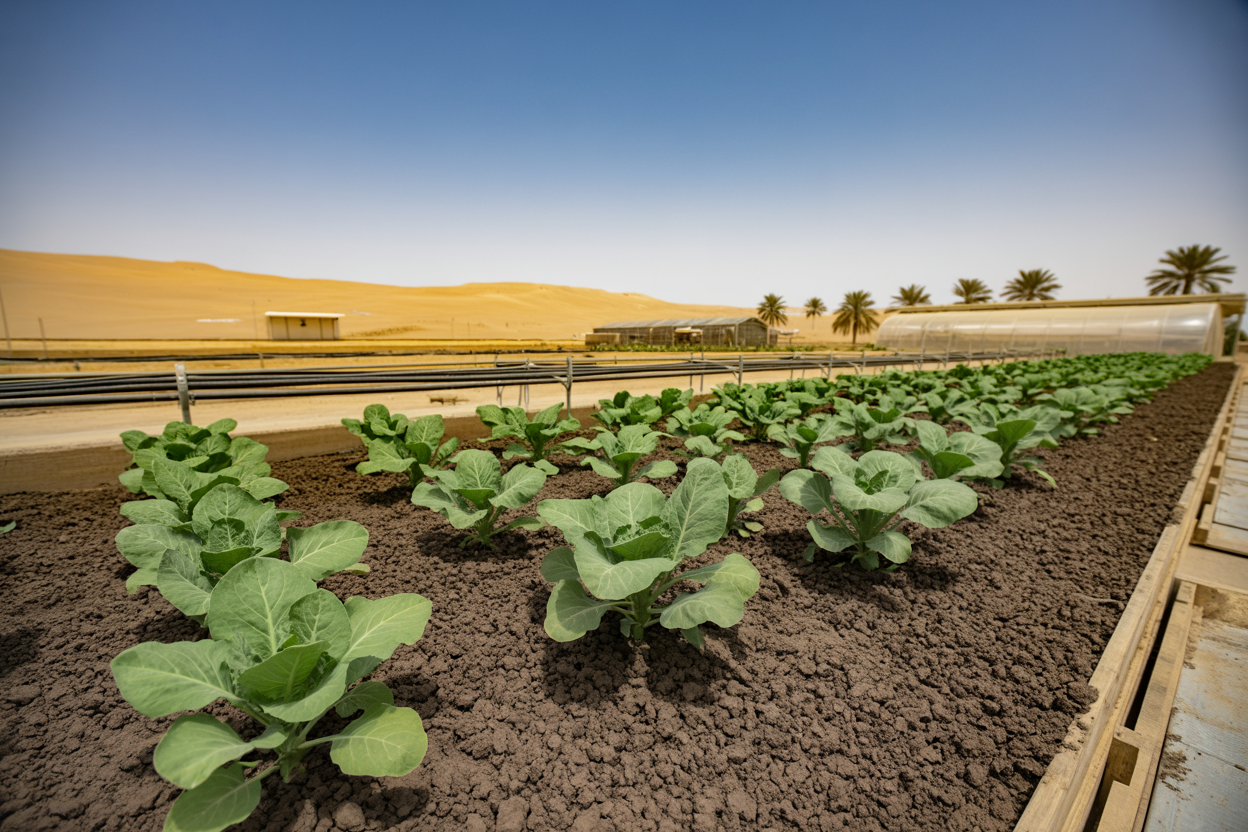
The scorching UAE climate presents unique challenges for farmers, particularly when it comes to water management. Vermicompost UAE farmers have discovered something remarkable about this organic amendment – it acts like a natural sponge in desert soils. The rich organic matter in vermicompost can hold up to 20 times its weight in water, creating tiny reservoirs throughout the soil profile.
When earthworms process organic waste, they create humus-rich castings that dramatically improve soil structure. These microscopic improvements translate to massive water savings for UAE farmers. Sandy desert soils typically drain water faster than plants can absorb it, but vermicompost changes this equation completely.
Research conducted in similar arid regions shows that soils amended with vermicompost retain moisture 3-4 times longer than untreated sandy soils. For UAE farmers facing water scarcity and high irrigation costs, this means fewer watering cycles and reduced water bills. The organic particles bind soil grains together, creating stable aggregates that hold water while still allowing proper drainage.
Natural Nutrient Release Matching Plant Growth Cycles
Unlike the sudden nutrient rush from chemical fertilizers, vermicompost provides a steady, measured release of nutrients that aligns perfectly with plant needs. This slow-release mechanism proves especially valuable in UAE’s extreme temperatures where chemical fertilizers often break down too quickly or get washed away during irrigation.
The microbial activity in vermicompost creates a living soil ecosystem that continuously processes nutrients. Essential elements like nitrogen, phosphorus, and potassium become available gradually as plants develop their root systems and increase their nutritional demands. This natural timing reduces the risk of nutrient burn that commonly occurs with chemical fertilizers in hot climates.
UAE desert farming benefits significantly from this sustained nutrition model. Plants receive consistent feeding throughout their growth cycle without the peaks and valleys associated with synthetic fertilizers. The result? More predictable yields and healthier crops that better withstand environmental stress.
Improved Soil Structure for Better Root Development
Desert soils in the UAE often suffer from compaction and poor structure, creating hostile environments for root growth. Vermicompost transforms these challenging conditions by introducing beneficial microorganisms and organic matter that naturally improve soil architecture.
The biological activity sparked by vermicompost creates networks of tiny channels and pores throughout the soil. These pathways allow roots to penetrate deeper and spread wider, accessing water and nutrients more efficiently. Stronger root systems translate directly to more resilient plants that can better handle UAE’s harsh growing conditions.
Field observations from organic farming UAE operations show that plants grown in vermicompost-amended soils develop root systems 40-60% more extensive than those in untreated soils. This enhanced root development becomes crucial during periods of water stress or extreme temperatures, giving plants the infrastructure they need to survive and thrive.
Cost-Effective Long-Term Soil Health Investment
While chemical fertilizers require constant reapplication and increasingly higher doses over time, vermicompost works differently. One application continues improving soil health for multiple growing seasons, making it a smart financial choice for UAE farmers thinking beyond immediate costs.
The initial investment in vermicompost pays dividends through reduced input costs over time. Farmers report needing less water, fewer pesticide applications, and minimal additional fertilization in subsequent seasons. The improved soil biology creates a self-sustaining system that maintains fertility naturally.
Sustainable agriculture UAE practitioners have documented cost savings of 30-40% on input expenses after transitioning to vermicompost systems. These savings compound year after year as soil health improves, creating a positive feedback loop that benefits both farm profitability and environmental stewardship. The long-term nature of these benefits makes vermicompost an investment rather than just an expense.
Chemical Fertilizers Performance in UAE Desert Agriculture
Rapid Nutrient Delivery for Quick Crop Response
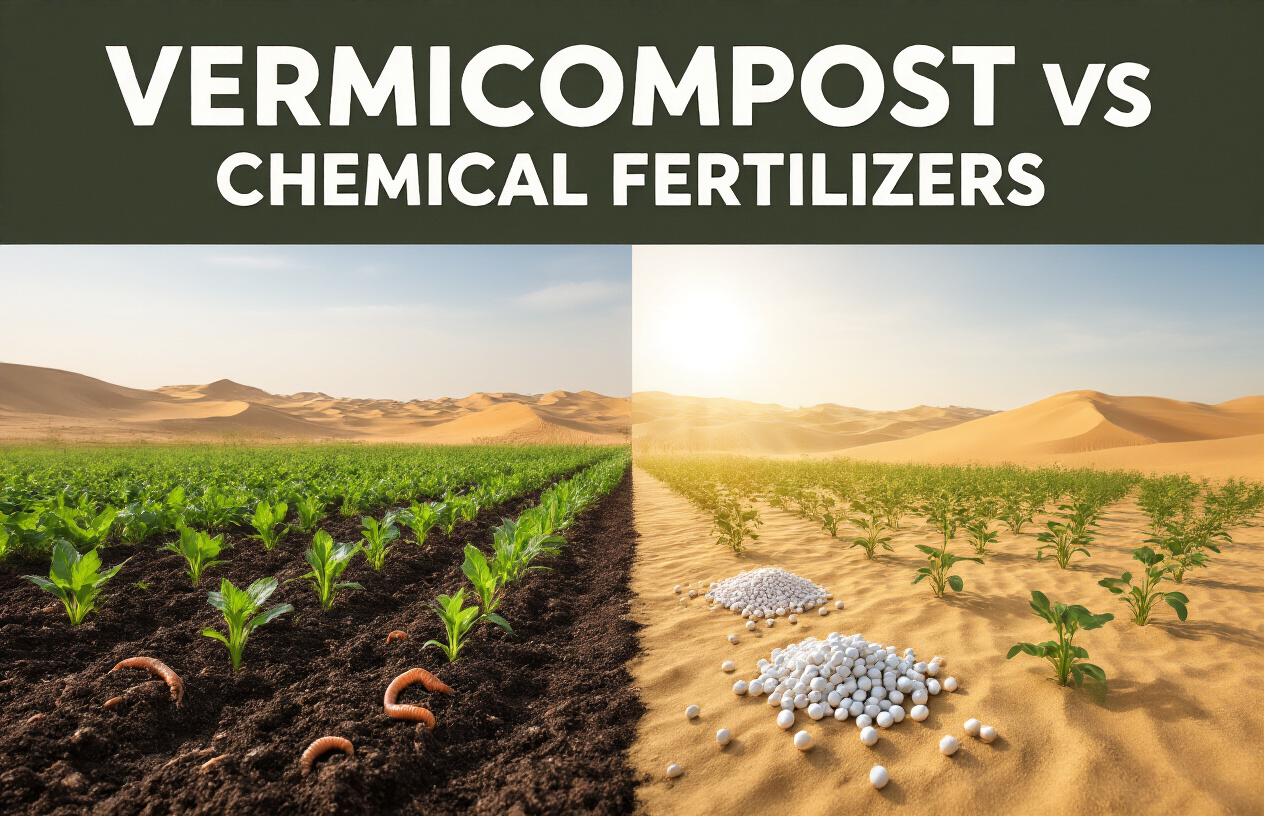
Chemical fertilizers UAE farming operations rely heavily on the immediate availability of nutrients these synthetic inputs provide. When crops show signs of nutrient deficiency in the harsh UAE desert climate, chemical fertilizers can address the problem within days rather than weeks. This speed becomes critical during the country’s short growing seasons, where every day counts for maximizing yield.
The quick-release formulations dissolve rapidly in irrigation water, making nutrients instantly available to plant roots. Desert soils in the UAE often lack organic matter, which means plants depend entirely on external inputs for nutrition. Chemical fertilizers bypass the slow decomposition process required by organic alternatives, delivering nitrogen, phosphorus, and potassium directly to hungry crops.
UAE farmers working with time-sensitive crops like leafy greens and herbs particularly benefit from this rapid response. When market prices fluctuate quickly, the ability to push crops to maturity faster can mean the difference between profit and loss. The immediate nutrient uptake also helps plants establish stronger root systems quickly, which proves essential for surviving the extreme heat stress common in UAE agriculture.
Precise Nutrient Control for Specific Crop Requirements
Modern UAE agriculture fertilizers allow farmers to customize nutrient ratios with laboratory-level precision. Different crops have vastly different nutritional needs, and chemical fertilizers enable growers to match these requirements exactly. Tomatoes might need higher potassium levels during fruiting, while leafy greens require more nitrogen for rapid leaf development.
Water-soluble formulations integrate seamlessly with the advanced drip irrigation systems prevalent across UAE farms. Farmers can adjust nutrient concentrations based on growth stages, weather conditions, and soil tests. This precision becomes especially valuable when growing high-value crops like strawberries or specialty herbs where quality commands premium prices.
The ability to split nutrient applications throughout the growing season gives farmers unprecedented control. They can reduce nitrogen during flowering to prevent excessive vegetative growth, then boost potassium during fruit development. This level of fine-tuning simply isn’t possible with slower-release organic alternatives in the fast-paced UAE agricultural environment.
Consistent Results Regardless of Environmental Variables
Chemical fertilizers perform predictably even when UAE desert farming conditions become extreme. Unlike organic fertilizers that depend on soil microbiology for nutrient release, synthetic fertilizers work independently of soil temperature, moisture fluctuations, or microbial activity levels.
During the scorching summer months when soil temperatures can exceed 50°C, organic matter decomposition slows dramatically or stops entirely. Chemical fertilizers continue delivering nutrients at the same rate, ensuring crops don’t suffer from nutrient starvation during stress periods. This reliability proves crucial for maintaining crop quality when temperatures and humidity create challenging growing conditions.
The standardized manufacturing process means each bag contains exactly the same nutrient ratios and concentrations. Farmers can plan their nutrition programs with confidence, knowing the fertilizer will perform identically whether applied in January’s mild weather or July’s extreme heat. This consistency helps UAE growers meet strict export quality standards and maintain reliable production schedules year-round.
| Environmental Factor | Chemical Fertilizer Response | Impact on Crop Nutrition |
|---|---|---|
| High soil temperature (40-50°C) | Consistent nutrient release | Maintains steady nutrition |
| Low soil moisture | Dissolves readily with irrigation | Quick nutrient availability |
| pH fluctuations | Stable nutrient form | Predictable plant uptake |
| Extreme humidity | No decomposition dependency | Reliable performance |
Environmental Impact Comparison in UAE Farming Systems
Soil Salinity Prevention with Organic Matter Addition
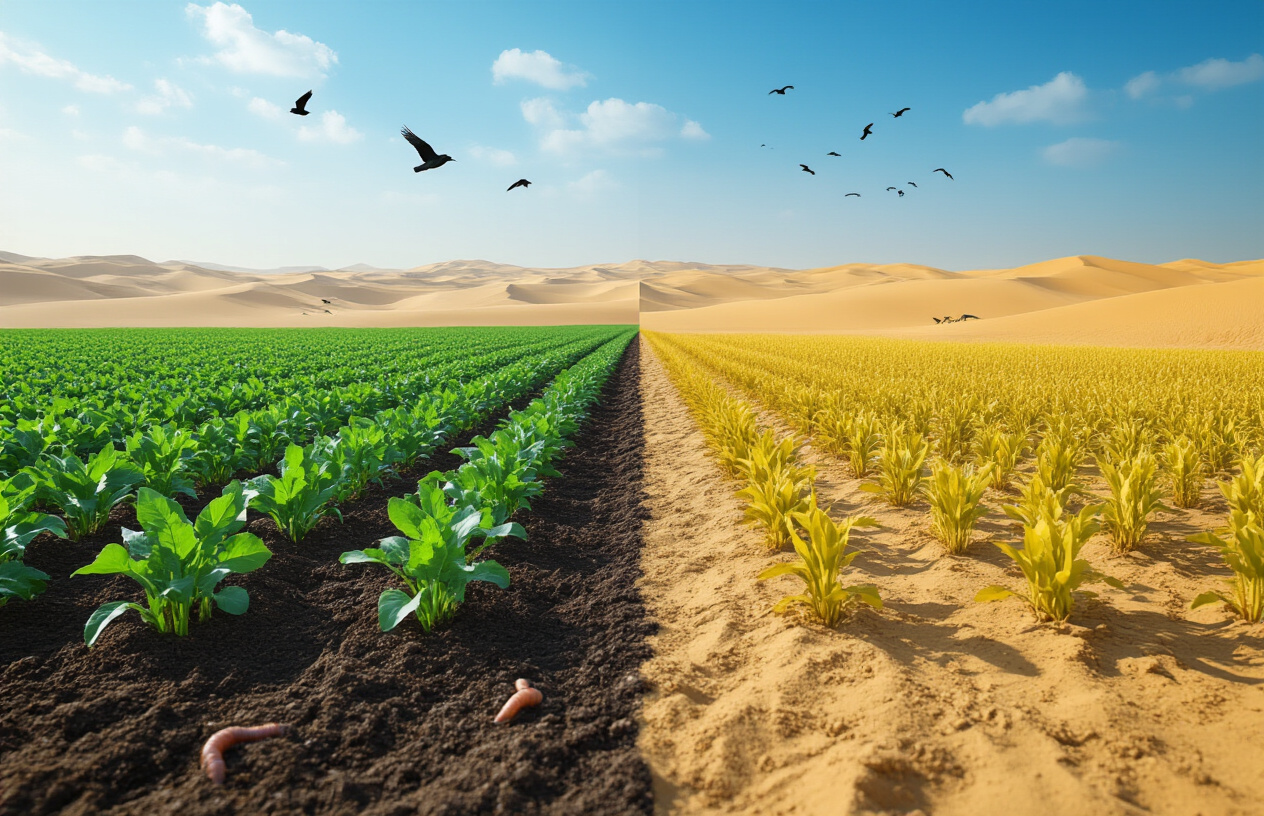
Vermicompost UAE farmers have discovered a powerful ally in combating one of desert agriculture’s biggest challenges: soil salinity. The organic matter in vermicompost creates a protective buffer system that helps prevent salt accumulation in agricultural soils. When you add vermicompost to sandy UAE soils, it increases the soil’s cation exchange capacity, allowing it to hold nutrients while releasing excess salts through improved drainage.
Chemical fertilizers often make salinity problems worse. These synthetic inputs can increase salt concentrations in soil over time, especially when irrigation water already contains elevated mineral levels. The repeated application of chemical fertilizers UAE farming systems creates a cycle where farmers need more water to flush out accumulated salts, wasting precious water resources.
Organic matter from vermicompost improves soil structure by binding sand particles together, creating better water infiltration and reducing surface evaporation. This natural process helps maintain optimal soil moisture levels while preventing the upward movement of salts that typically occurs in desert conditions.
Groundwater Protection from Chemical Runoff
Chemical fertilizers environmental impact UAE becomes particularly concerning when considering groundwater contamination. Synthetic nitrogen and phosphorus compounds easily leach through sandy soils, reaching underground water sources that supply both agricultural and municipal needs. This contamination creates long-term environmental problems that affect entire communities.
Vermicompost releases nutrients slowly and steadily, matching plant uptake rates more closely than chemical fertilizers. This controlled release means less excess nutrients remain in soil to potentially contaminate groundwater systems. The organic molecules in vermicompost also bind to nutrients, creating natural slow-release compounds that plants can access over extended periods.
Desert farming conditions in the UAE make groundwater protection even more critical since alternative water sources remain limited. Every drop of clean groundwater preserved today ensures sustainable agriculture for future generations.
Carbon Footprint Reduction Through Local Waste Recycling
Sustainable agriculture UAE practices gain significant environmental benefits from local vermicompost production. Converting organic waste materials into valuable fertilizer reduces methane emissions that would otherwise occur in landfills. Food scraps, garden trimmings, and agricultural residues become carbon-negative inputs when processed through vermicomposting systems.
Chemical fertilizer production requires enormous amounts of energy, primarily from fossil fuels. Manufacturing synthetic nitrogen fertilizers involves the Haber-Bosch process, which consumes approximately 1-2% of global energy production. Transportation of these products to UAE farms adds additional carbon emissions to their environmental footprint.
Local vermicompost production creates a circular economy where waste becomes a resource. UAE farms can establish on-site composting systems using earthworms to process organic waste materials, eliminating transportation emissions while producing high-quality fertilizer. This approach turns waste management costs into profit opportunities for farming operations.
Biodiversity Enhancement in Agricultural Ecosystems
UAE agriculture fertilizers choice significantly impacts local ecosystem health and biodiversity. Vermicompost supports beneficial microorganisms, insects, and soil fauna that create resilient agricultural systems. These living communities help plants resist diseases, improve nutrient cycling, and create natural pest control mechanisms.
Chemical fertilizers can disrupt soil microbiome balance, reducing populations of beneficial bacteria and fungi that plants rely on for optimal health. This disruption often leads to increased dependence on pesticides and fungicides, creating additional environmental stress on local ecosystems.
Earthworm castings contain beneficial microorganisms that colonize plant root zones, creating protective relationships that enhance plant immunity. These microbial communities also help break down organic pollutants and heavy metals, naturally detoxifying agricultural soils over time.
| Environmental Factor | Vermicompost Impact | Chemical Fertilizer Impact |
|---|---|---|
| Soil Salinity | Reduces salt buildup | Increases salt accumulation |
| Groundwater Quality | Minimal leaching risk | High contamination potential |
| Carbon Emissions | Carbon negative/neutral | High carbon footprint |
| Soil Biodiversity | Enhances microbial life | Reduces beneficial organisms |
| Water Efficiency | Improves retention | Requires more irrigation |
Economic Analysis for UAE Farm Profitability
Initial Investment Costs and Setup Requirements
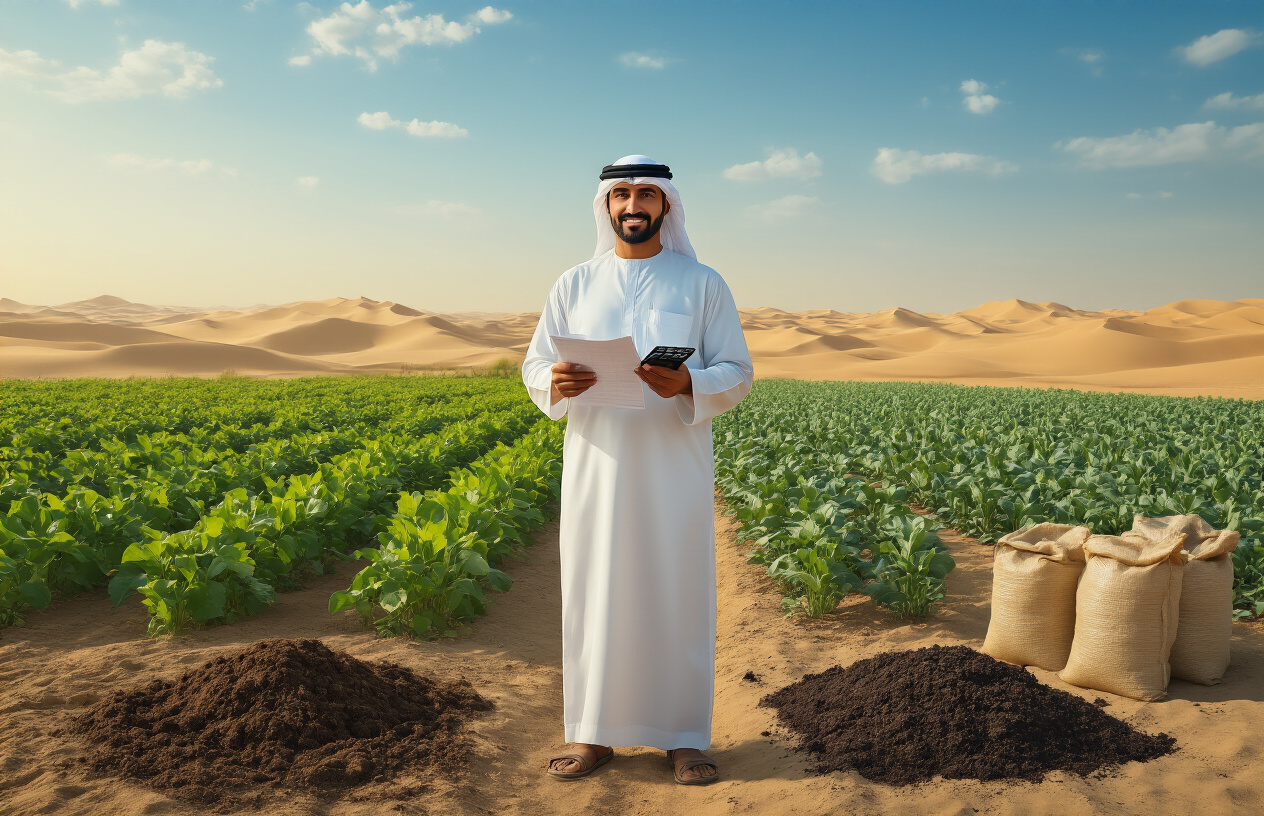
Setting up vermicompost production on UAE farms requires different upfront investments compared to chemical fertilizers UAE farming operations. Vermicompost systems need dedicated space, worm bins, earthworms (typically red wigglers), bedding materials, and basic infrastructure for temperature control. A small-scale vermicompost setup for a 5-hectare farm costs approximately AED 15,000-25,000, including bins, worms, and initial organic waste materials.
Chemical fertilizer systems demand storage facilities, application equipment like spreaders or fertigation systems, and safety gear. The initial investment ranges from AED 8,000-18,000 for basic equipment. However, ongoing chemical fertilizer purchases create continuous expenses that vermicompost production eliminates once established.
| Investment Category | Vermicompost Setup | Chemical Fertilizer Setup |
|---|---|---|
| Equipment & Infrastructure | AED 12,000-18,000 | AED 8,000-15,000 |
| Initial Materials | AED 3,000-7,000 | AED 2,000-5,000 |
| Training & Setup | AED 2,000-3,000 | AED 1,000-2,000 |
| Total Initial Cost | AED 17,000-28,000 | AED 11,000-22,000 |
UAE desert farming conditions add complexity to both systems. Vermicompost operations need shade structures and cooling systems to protect worms from extreme heat, increasing setup costs by 20-30%. Chemical storage requires climate-controlled facilities to prevent degradation in high temperatures.
Long-Term Return on Investment Calculations
UAE farm profitability analysis reveals striking differences between vermicompost and chemical fertilizers over time. Vermicompost systems typically break even within 18-24 months, while chemical fertilizers create ongoing expenses without asset building.
A medium-sized UAE farm (10 hectares) using vermicompost can produce 15-20 tons annually after year two. This production eliminates fertilizer purchases worth AED 35,000-50,000 per year. Additional revenue streams include selling excess vermicompost to neighboring farms at AED 800-1,200 per ton.
Chemical fertilizers for the same farm area cost AED 40,000-60,000 annually, with prices increasing 8-12% yearly due to global market fluctuations and import costs. Over five years, chemical fertilizer expenses reach AED 230,000-350,000.
5-Year ROI Comparison:
- Vermicompost: Initial investment AED 25,000, savings AED 200,000+
- Chemical fertilizers: Cumulative cost AED 290,000+
- Net advantage: AED 265,000+ for vermicompost
Sustainable agriculture UAE practices using vermicompost also improve soil health, reducing water consumption by 15-25% and increasing crop yields by 10-20% after the second year. These benefits compound the financial advantages significantly.
Labor and Maintenance Cost Comparisons
Labor requirements differ substantially between organic farming UAE methods and chemical fertilizer applications. Vermicompost production needs consistent but minimal daily attention – feeding worms, monitoring moisture, and turning compost takes 2-3 hours weekly for a 10-hectare operation.
Chemical fertilizer application requires seasonal intensive labor during application periods, specialized training for safe handling, and equipment maintenance. The irregular but intensive nature often means hiring additional temporary workers during peak seasons.
Monthly Labor Costs:
- Vermicompost maintenance: AED 1,200-1,800
- Chemical fertilizer management: AED 2,000-3,500
Maintenance costs favor vermicompost systems long-term. Worm populations self-sustain with proper care, and equipment consists mainly of simple bins and basic tools. Chemical fertilizer systems require regular equipment calibration, replacement of application tools, and safety equipment updates.
Health and safety considerations add hidden costs to chemical fertilizer use. Worker safety training, protective equipment, and potential health insurance increases cost an additional AED 3,000-5,000 annually. Vermicompost operations eliminate these safety-related expenses while creating healthier working conditions for farm staff.
The UAE’s commitment to sustainable practices and reducing environmental impact makes vermicompost increasingly attractive from both regulatory compliance and cost perspectives.
Practical Implementation Strategies for UAE Farmers
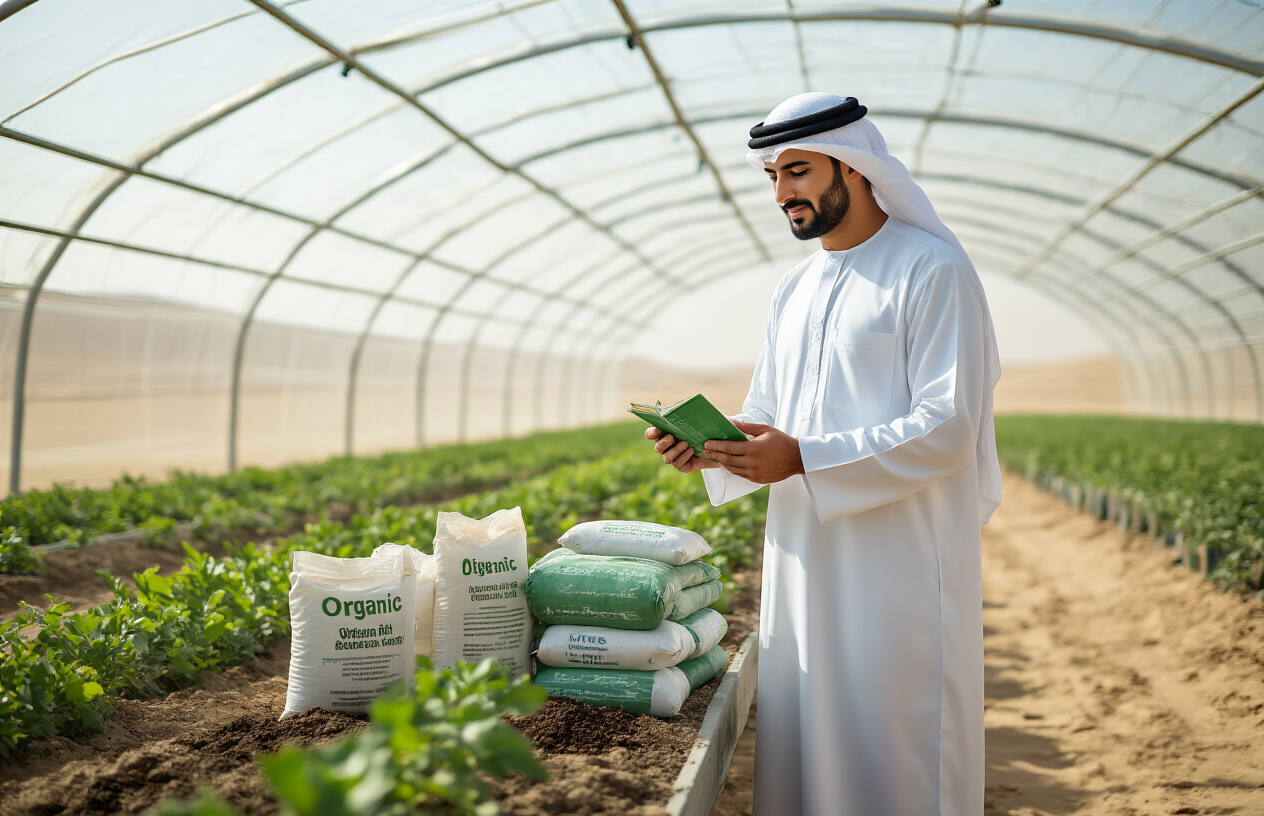
Climate-Specific Application Methods and Timing
Working with vermicompost UAE conditions means timing everything perfectly. The intense summer heat from June to September creates a challenging window where vermicompost application needs careful planning. Apply vermicompost during the cooler months from October to March when soil temperatures stay below 35°C. This timing allows beneficial microorganisms to establish before the scorching summer arrives.
For chemical fertilizers UAE farming, split applications work best during the growing season. Apply nitrogen-based fertilizers early morning or late evening to prevent nutrient burn. The high soil pH in UAE desert conditions means phosphorus fertilizers need chelated forms for better absorption.
Water management plays a crucial role with both fertilizer types. Vermicompost holds moisture longer in sandy soils, reducing irrigation frequency by 20-30%. Chemical fertilizers require immediate watering to prevent salt buildup, especially during summer months when evaporation rates spike.
Hybrid Approaches Combining Both Fertilizer Types
Smart UAE agriculture fertilizers strategies combine both systems for maximum benefit. Start with a vermicompost base layer (2-3 tons per hectare) applied before planting. This creates a biological foundation that improves soil structure and water retention.
Add targeted chemical fertilizers during peak growth periods. Use soluble fertilizers for quick nutrient boosts during flowering or fruiting stages. The vermicompost acts as a buffer, preventing chemical burn while extending nutrient release.
Vermicompost vs chemical fertilizers doesn’t have to be an either-or choice. Successful UAE farms use 70% vermicompost for soil building and 30% chemical fertilizers for precision nutrition. This approach reduces chemical inputs while maintaining yield consistency.
Monitor soil EC levels weekly when combining both types. Salinity buildup happens faster in UAE conditions, so regular testing prevents crop damage.
Crop-Specific Recommendations for Different Vegetables
Different vegetables respond uniquely to vermicompost benefits UAE conditions. Leafy greens like lettuce and spinach thrive with pure vermicompost applications. These crops need steady nitrogen release, which vermicompost provides naturally over 3-4 months.
Tomatoes and peppers benefit from hybrid approaches. Use vermicompost as base nutrition (3-4 tons/hectare) plus targeted potassium fertilizers during fruit development. The combination supports both vegetative growth and fruit quality.
| Crop Type | Vermicompost Rate | Chemical Supplement | Application Timing |
|---|---|---|---|
| Leafy Greens | 2-3 tons/hectare | None needed | Pre-planting |
| Tomatoes | 3-4 tons/hectare | K₂SO₄ during fruiting | Base + monthly |
| Cucumbers | 2-3 tons/hectare | Calcium during growth | Base + bi-weekly |
| Root Vegetables | 1-2 tons/hectare | Phosphorus at planting | Pre-planting |
Cucumber crops need careful calcium management in UAE desert farming conditions. Vermicompost provides slow-release calcium, but supplement with calcium chloride during rapid growth phases.
Root vegetables like carrots work best with lower vermicompost rates to prevent excessive top growth. Focus on phosphorus-rich chemical fertilizers during root development stages.
Scaling Solutions for Small and Large Farm Operations
Small farms (under 5 hectares) can maximize UAE farm profitability by producing their own vermicompost. Set up worm bins using food waste and crop residues. A 10-square-meter worm farm produces enough vermicompost for 2-3 hectares annually.
Large operations need different strategies for sustainable agriculture UAE goals. Partner with local waste management facilities for organic material supply. Many UAE cities provide free organic waste for composting operations.
Commercial vermicompost production requires climate-controlled facilities during summer months. Invest in shade structures and cooling systems to maintain worm populations year-round. The initial investment pays back within 2-3 seasons through reduced fertilizer costs.
Transportation becomes critical for large farms. Vermicompost weighs significantly more than chemical fertilizers. Plan storage facilities at multiple field locations to reduce hauling costs.
Automated application equipment works for both fertilizer types. Modify existing spreaders for vermicompost application. GPS-guided systems ensure uniform distribution across large fields, reducing labor costs while improving application accuracy.
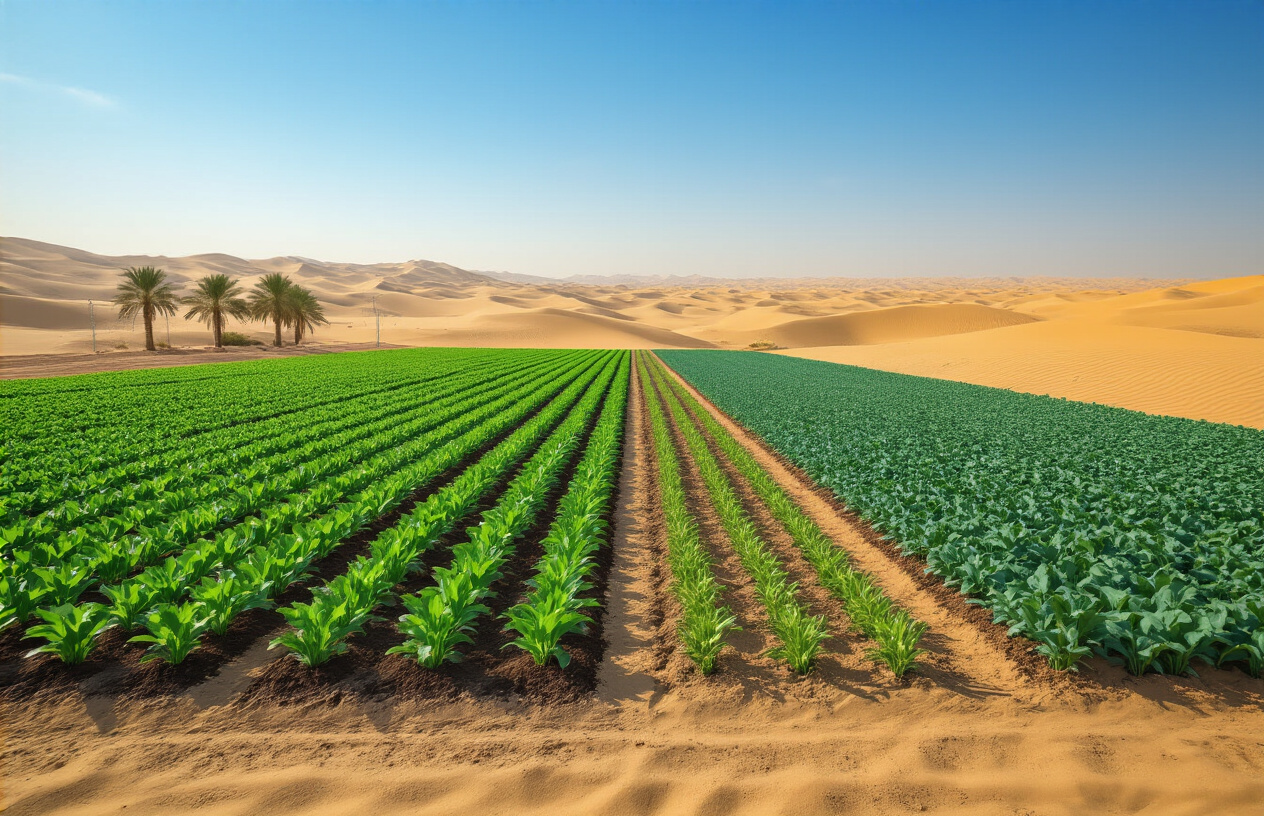
The choice between vermicompost and chemical fertilizers isn’t black and white for UAE farmers. Vermicompost shines when it comes to building healthy soil that can handle the country’s harsh desert conditions, while chemical fertilizers deliver quick results that many commercial operations need. The environmental benefits of organic matter clearly favor vermicompost, especially with water conservation being so critical here, but the upfront costs and longer timeline for results can make chemical options more appealing for immediate productivity goals.
Smart UAE farmers are finding success by blending both approaches rather than picking just one. Start small with vermicompost in test plots to see how your specific crops and soil respond, then gradually expand based on your results and budget. The future of farming in the UAE likely lies in this balanced approach – using vermicompost to build long-term soil health while strategically applying chemical fertilizers when crops need that extra push. Your farm’s success depends on finding the right mix that works for your land, crops, and financial situation.