
GCC farmers are discovering that organic farming methods can triple their harvests while working with the region’s challenging desert conditions. This guide shows agricultural professionals, farm managers, and sustainable farming enthusiasts in Gulf countries exactly how to boost crop yields organically using proven techniques designed for extreme heat, water scarcity, and sandy soils.
Many growers assume organic methods can’t compete with conventional farming in harsh GCC climates, but recent successes across the Arabian Peninsula prove otherwise. Smart farmers are now combining traditional Middle Eastern agricultural wisdom with modern organic techniques to create thriving operations that outperform chemical-dependent farms.
You’ll learn advanced soil preparation techniques that transform desert sand into productive growing medium, plus water management strategies that maximize every drop while reducing costs by 40%. We’ll also cover natural pest control methods specifically tested in GCC conditions and organic fertilization approaches that work with your local climate rather than against it.
Understanding GCC Climate Challenges for Organic Farming
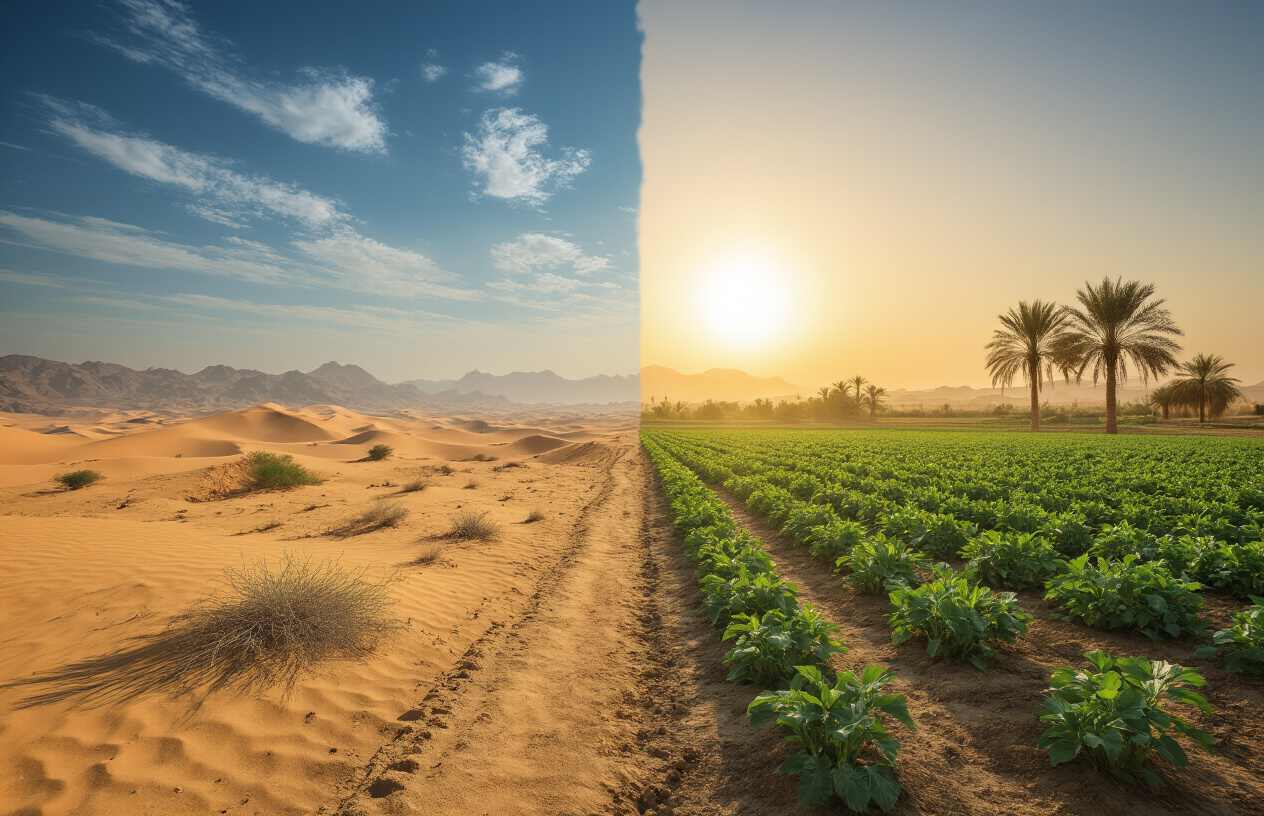
Identifying Water Scarcity Solutions for Sustainable Agriculture
Water scarcity ranks as the biggest hurdle for organic farming GCC regions face today. Smart water conservation starts with drip irrigation systems that deliver water directly to plant roots, cutting usage by up to 50% compared to traditional sprinklers. Installing moisture sensors helps you track soil hydration levels and prevents overwatering.
Rainwater harvesting transforms brief downpours into valuable resources. Simple collection systems using gutters and storage tanks capture precious precipitation during rare rainfall events. Greywater recycling from household activities provides another water source after proper filtration.
Mulching becomes your secret weapon against evaporation. Organic materials like date palm fronds, coconut coir, or dried grass clippings create protective barriers that lock moisture in soil. This technique alone can reduce irrigation needs by 40%.
Adapting to Extreme Temperature Fluctuations
Desert agriculture methods require protective structures that shield crops from temperature swings. Shade nets reduce daytime heat stress while allowing proper air circulation. Choose nets with 50-70% shade density for most vegetables and herbs.
Thermal mass systems help stabilize temperatures around plants. Water barrels or stone walls absorb heat during hot days and release warmth during cool nights. Strategic placement of these elements creates microclimates that support consistent plant growth.
Early morning and late evening irrigation schedules work with natural temperature patterns. Watering during cooler hours prevents shock to plant systems and reduces water loss through evaporation.
Managing Sandy Soil Conditions Effectively
Sandy soils drain too quickly and lack essential nutrients, but soil preparation techniques can transform these conditions. Adding organic matter like compost, aged manure, or biochar improves water retention dramatically. Mix in 3-4 inches of organic material annually to build soil structure.
Green manure crops like legumes fix nitrogen while adding biomass to sandy soils. Plant cowpeas, alfalfa, or clover during off-seasons, then till them into the ground before main crop planting. This practice enriches soil naturally while improving texture.
Clay amendments help sandy soils hold water and nutrients longer. Small amounts of bentonite clay mixed with organic matter create better growing conditions for sustainable farming GCC applications.
Overcoming High Salinity Levels in Irrigation Water
Salt buildup destroys crop productivity, but organic solutions exist for managing salinity issues. Gypsum applications help leach excess sodium from soil while providing calcium for plant health. Apply 2-3 pounds per 100 square feet annually.
Salt-tolerant cover crops like barley or sorghum can flush excess salts from soil naturally. These crops absorb salts through their root systems, then you remove the plant material before it decomposes and releases salts back into soil.
Frequent light irrigations prevent salt concentration around roots. Deep, infrequent watering pushes salts below the root zone where they cause less damage. Installing subsurface drainage systems helps move salty water away from growing areas permanently.
Essential Soil Preparation Techniques for Maximum Yields
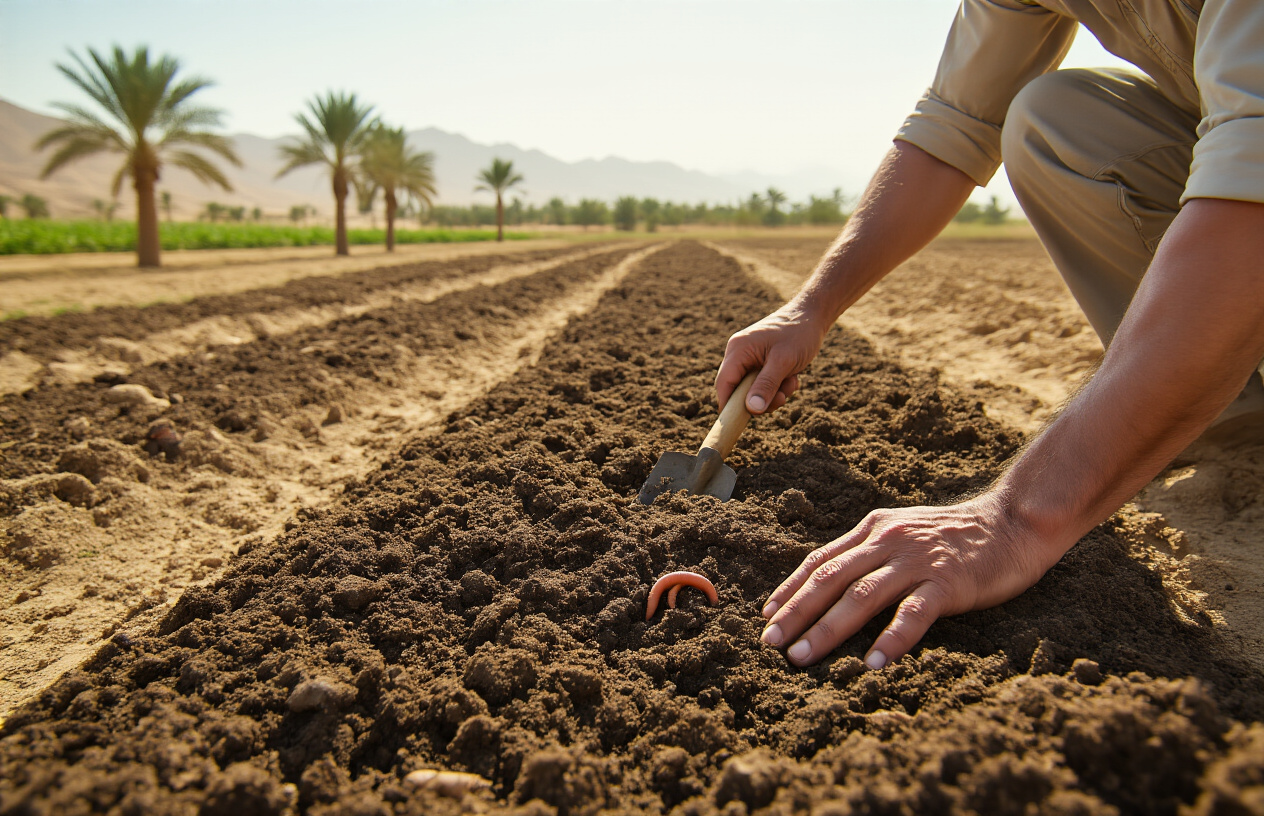
Building Organic Matter Through Composting Methods
Creating nutrient-rich compost in GCC conditions requires adapting traditional methods to the region’s extreme heat and aridity. Start by establishing a shaded composting area using palm fronds or shade cloth to protect your organic materials from intense solar radiation. The key to successful organic farming GCC lies in maintaining proper moisture levels—aim for 50-60% moisture content in your compost pile.
Layer green materials like food scraps and fresh plant matter with brown materials such as dried date palm fronds, sawdust, or shredded cardboard. The carbon-to-nitrogen ratio should be approximately 30:1 for optimal decomposition. Turn your compost pile weekly to ensure proper aeration and prevent anaerobic conditions that create foul odors.
Accelerate the composting process by adding beneficial microorganisms through compost activators or finished compost from previous batches. In the harsh GCC climate, thermophilic composting works exceptionally well, reaching temperatures of 140-160°F that naturally eliminate pathogens and weed seeds. The finished compost should be dark, crumbly, and have an earthy smell.
Implementing Mycorrhizal Fungi Inoculation
Mycorrhizal fungi form symbiotic relationships with plant roots, dramatically improving nutrient uptake and water absorption—critical advantages in arid Gulf conditions. These beneficial fungi extend the root system’s reach by up to 1000 times, making soil preparation techniques more effective for sustainable farming GCC operations.
Purchase commercial mycorrhizal inoculants specifically designed for your target crops. Apply the inoculant directly to seed furrows or transplant holes at planting time. For existing crops, create small holes around the root zone and apply the fungi mixture with a small amount of water.
Different crops benefit from specific mycorrhizal species:
- Vegetables and herbs: Glomus intraradices
- Fruit trees: Glomus mosseae and Rhizophagus irregularis
- Legumes: Gigaspora margarita
Monitor soil temperature during inoculation—apply when soil temperatures are between 65-85°F for optimal colonization. The fungi establish their network within 2-4 weeks, creating visible improvements in plant vigor and drought resistance.
Creating Effective Drainage Systems in Arid Conditions
Proper drainage prevents salt accumulation and waterlogging, common issues in desert agriculture methods. Install subsurface drainage tiles 3-4 feet deep and 20-30 feet apart, depending on your soil type. Clay soils require closer spacing, while sandy soils can accommodate wider intervals.
Create raised beds 6-12 inches high to improve surface drainage and root zone aeration. Mix coarse sand, perlite, or pumice into heavy clay soils to increase porosity. The ideal soil structure should drain freely within 24 hours after irrigation while retaining enough moisture for plant needs.
Build French drains around your growing areas using gravel and perforated pipes to direct excess water away from crop zones. Install drainage outlets that can be monitored for salt content—flush the system periodically with fresh water to prevent salt buildup.
Establishing Optimal pH Balance Naturally
Most crops thrive in slightly acidic to neutral soil (pH 6.0-7.0), but GCC soils often lean alkaline due to limestone bedrock and low rainfall. Test your soil pH quarterly using a reliable digital meter or laboratory analysis.
Lower alkaline soil pH naturally using:
- Sulfur amendments: Apply elemental sulfur at 1-2 pounds per 100 square feet
- Organic acids: Incorporate coffee grounds, pine needles, or acidic compost
- Acid-forming fertilizers: Use ammonium sulfate instead of lime-based fertilizers
Raise acidic soil pH with:
- Wood ash: Apply sparingly—1-2 pounds per 100 square feet annually
- Crushed eggshells: Slow-release calcium source
- Bone meal: Provides phosphorus while gently raising pH
Track pH changes over 3-6 months and adjust applications accordingly. Gradual pH modification prevents shock to soil microorganisms and existing plant roots, supporting long-term soil health for boost crop yields organically goals.
Water Management Strategies That Triple Production
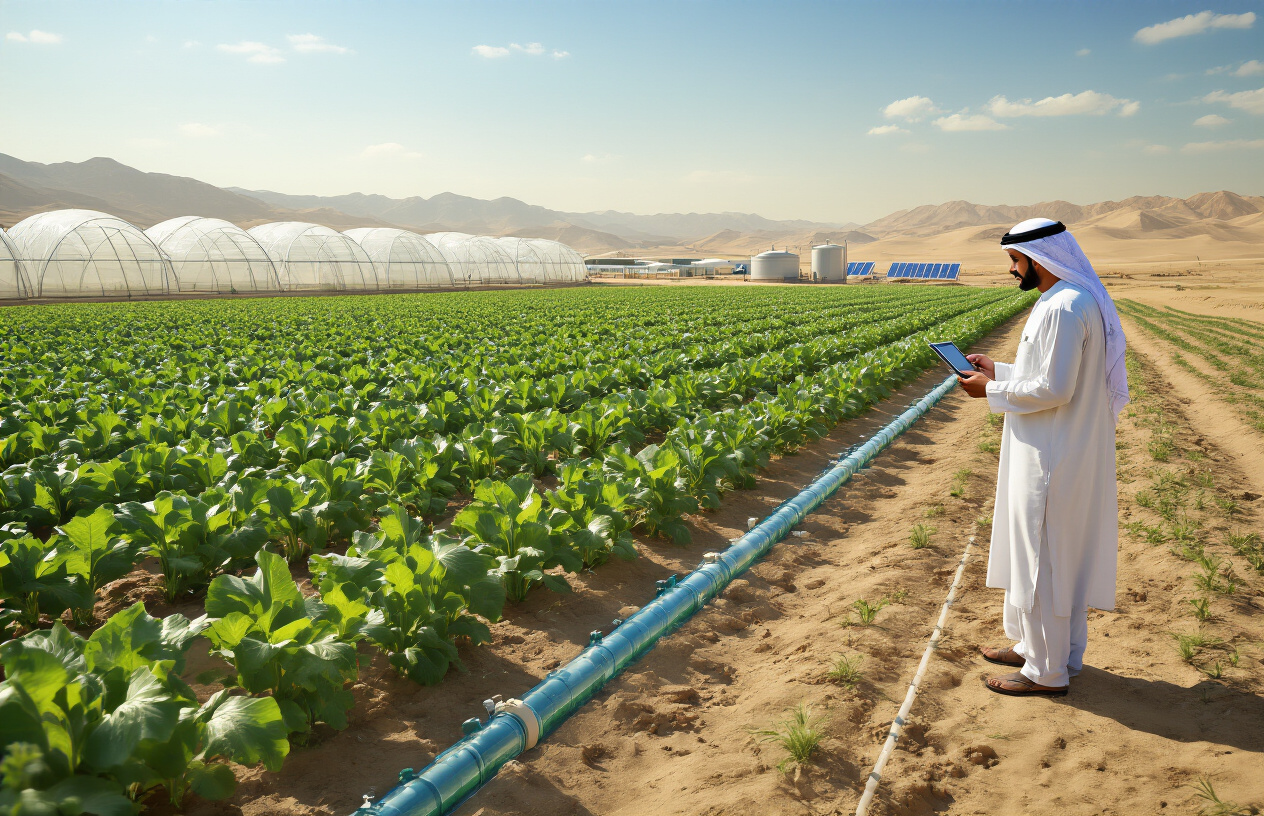
Installing Drip Irrigation with Organic Nutrient Delivery
Drip irrigation systems represent the backbone of successful water management organic farming in the GCC region. These precision systems deliver water directly to plant roots while reducing evaporation losses by up to 50% compared to traditional sprinkler methods. Modern drip systems can be enhanced with fertigation capabilities, allowing farmers to inject liquid organic fertilizers directly into the water stream.
The key to maximizing efficiency lies in proper emitter spacing and flow rate calibration. For most vegetable crops in GCC conditions, installing emitters every 12-18 inches with flow rates of 1-2 gallons per hour provides optimal coverage. Pressure-compensating emitters maintain consistent delivery even across varied terrain, which is essential for uniform nutrient distribution.
Organic nutrient delivery through drip systems requires careful pH monitoring. Most organic liquid fertilizers work best at pH levels between 6.0-7.0. Installing automated pH adjustment systems ensures nutrients remain bioavailable throughout the growing season.
Harvesting and Storing Rainwater Efficiently
Despite limited rainfall, the GCC region receives seasonal precipitation that can be captured and stored for year-round use. Professional rainwater harvesting systems can collect 20-25 gallons per 1,000 square feet of roof area during moderate rainfall events.
Storage tank sizing should account for peak collection periods and extended dry spells. Food-grade polyethylene tanks with UV protection work well in desert climates. Calculate storage needs based on crop requirements during the hottest months – typically 1.5-2 gallons per square foot of growing area per week.
First-flush diverters remove initial roof runoff containing dust and debris, while simple sand and charcoal filters improve water quality before storage. Adding mosquito control screens and tank covers prevents contamination while maintaining water quality for organic crop production Gulf applications.
Recycling Greywater for Continuous Crop Nutrition
Greywater recycling transforms household wastewater into valuable irrigation resources for sustainable farming GCC operations. Kitchen and bathroom sink water, when properly filtered, contains trace nutrients beneficial for plant growth while reducing freshwater demand by 30-40%.
Simple greywater systems use three-stage filtration: coarse screening removes large particles, sand filtration clarifies the water, and activated carbon removes soap residues. Avoid greywater from sources containing harsh chemicals or antibacterial soaps that could harm soil microorganisms.
Direct application through sub-surface irrigation prevents surface contamination while delivering moisture directly to root zones. Rotating greywater application areas every few weeks prevents salt buildup and maintains soil health for long-term organic production.
Timing Irrigation Cycles for Maximum Absorption
Strategic irrigation timing maximizes water uptake while minimizing waste in GCC climate agriculture conditions. Early morning applications between 4-7 AM take advantage of cooler temperatures and minimal wind, reducing evaporation losses by up to 60%.
Plant water needs vary throughout growth stages. Seedlings require frequent, light watering every 1-2 days, while mature plants benefit from deeper, less frequent irrigation every 3-5 days. Soil moisture sensors placed at 6-inch and 12-inch depths provide real-time data for precise scheduling.
Split irrigation cycles improve absorption rates in sandy soils common throughout the region. Instead of single long watering sessions, divide total water needs into 2-3 shorter applications spaced 30-45 minutes apart. This approach prevents runoff while allowing gradual soil saturation and better root zone moisture retention.
Natural Pest Control Methods for GCC Conditions
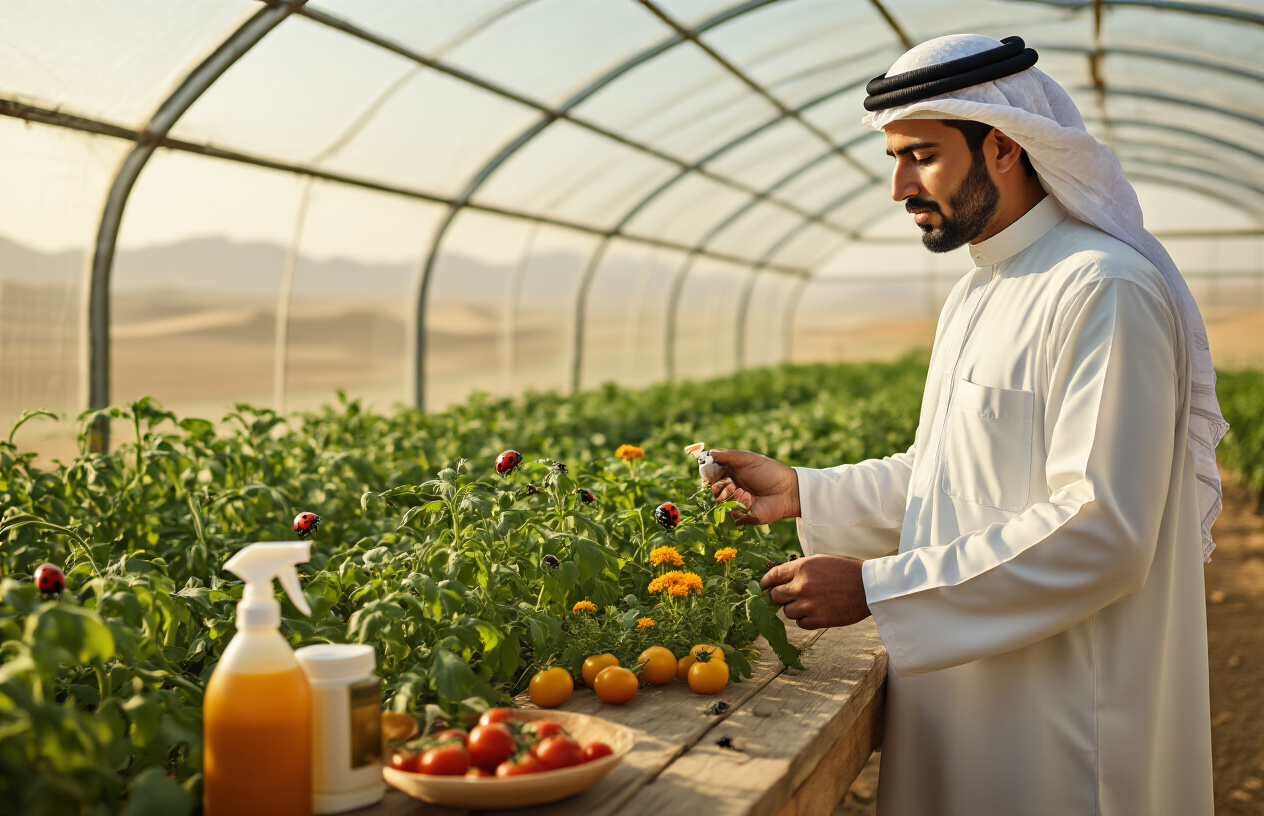
Introducing beneficial insects for biological control
Beneficial insects serve as nature’s pest control army, especially effective in GCC climates where harsh chemicals can damage delicate ecosystems. Ladybugs, lacewings, and predatory mites thrive in controlled environments and can reduce aphid populations by up to 90% within weeks.
You can attract these helpers by planting flowering herbs like dill, fennel, and sweet alyssum around crop borders. These plants provide nectar and pollen that beneficial insects need to survive and reproduce. In the Gulf region, timing matters – release beneficial insects during cooler evening hours when they’re most active.
Creating insect hotels using bamboo tubes, wood shavings, and small stones gives these creatures shelter from extreme temperatures. Position these structures in shaded areas near water sources to maximize their effectiveness.
Creating companion planting systems
Companion planting transforms your farm into a natural pest deterrent system. Marigolds planted between vegetable rows release compounds that repel nematodes and whiteflies – common problems in GCC agriculture. These vibrant flowers also attract pollinators that boost crop yields.
Basil grown alongside tomatoes improves flavor while deterring hornworms and aphids. The strong aromatic oils in basil confuse pests and mask the scent of target crops. Similarly, planting garlic and onions around cucumber and squash plants creates a natural barrier against cucumber beetles.
Effective companion plant combinations for GCC conditions:
| Main Crop | Companion Plant | Pest Controlled |
|---|---|---|
| Tomatoes | Basil, Marigolds | Hornworms, Aphids |
| Cucumbers | Radishes, Nasturtiums | Cucumber beetles, Squash bugs |
| Peppers | Catnip, Oregano | Flea beetles, Spider mites |
| Beans | Mint, Rosemary | Bean beetles, Ants |
Using organic sprays from local plant materials
Local plant materials offer powerful pest control solutions adapted to GCC conditions. Neem trees, common throughout the Gulf region, produce oil that disrupts insect reproduction cycles without harming beneficial species. Mix 2 tablespoons of neem oil with 1 gallon of water and spray during cooler morning hours.
Desert tobacco (Nicotiana glauca) creates an effective aphid spray when leaves are steeped in water for 24 hours. Strain the mixture and add a few drops of liquid soap to help it stick to plant surfaces. This natural nicotine solution repels soft-bodied insects without leaving harmful residues.
Garlic and hot pepper sprays work exceptionally well against caterpillars and small mammals that damage crops. Blend 10 garlic cloves and 3 hot peppers with water, strain, and apply weekly. These ingredients are readily available in local markets and cost significantly less than commercial pesticides.
Building physical barriers against desert pests
Physical barriers provide immediate protection against desert-specific pests like sand flies, locusts, and rodents. Fine mesh screens with openings smaller than 1mm effectively block whiteflies and thrips while allowing air circulation crucial in hot climates.
Row covers made from lightweight fabric protect young plants from sandstorms and sudden temperature drops common in desert regions. These covers can reduce pest pressure by 80% during vulnerable growth stages. Remove covers during flowering to allow pollination, then replace them if needed.
Barrier materials and their applications:
- Copper strips: Deter slugs and snails around raised beds
- Diatomaceous earth: Create barriers against crawling insects
- Reflective mulch: Confuses flying insects and reduces soil temperature
- Sticky traps: Monitor and catch flying pests before populations explode
Underground barriers using hardware cloth prevent burrowing rodents from damaging root systems. Bury the mesh 12 inches deep around high-value crops like carrots and potatoes.
Implementing crop rotation schedules
Smart crop rotation breaks pest life cycles and reduces disease pressure naturally. Many insects and pathogens are host-specific, meaning they can’t survive when their preferred crop disappears. Rotating between plant families every season disrupts these cycles effectively.
A four-year rotation works best in GCC conditions: Start with legumes (beans, peas) to fix nitrogen, follow with leafy greens (lettuce, spinach), then fruiting crops (tomatoes, peppers), and finish with root vegetables (carrots, radishes). This sequence maximizes soil health while minimizing pest buildup.
Sample 4-year rotation for organic pest control:
- Year 1: Legumes – Build soil nitrogen, reduce root rot
- Year 2: Leafy greens – Use available nitrogen, minimal pest pressure
- Year 3: Fruiting crops – Heavy feeders, different pest profile
- Year 4: Root crops – Break disease cycles, improve soil structure
Timing rotations with seasonal patterns in the GCC maximizes benefits. Plant cool-season crops during winter months when pest pressure naturally decreases. This approach reduces reliance on pest control measures while maintaining high productivity levels essential for organic farming GCC success.
Nutrient Enhancement Through Organic Fertilization
Producing high-quality compost from local waste
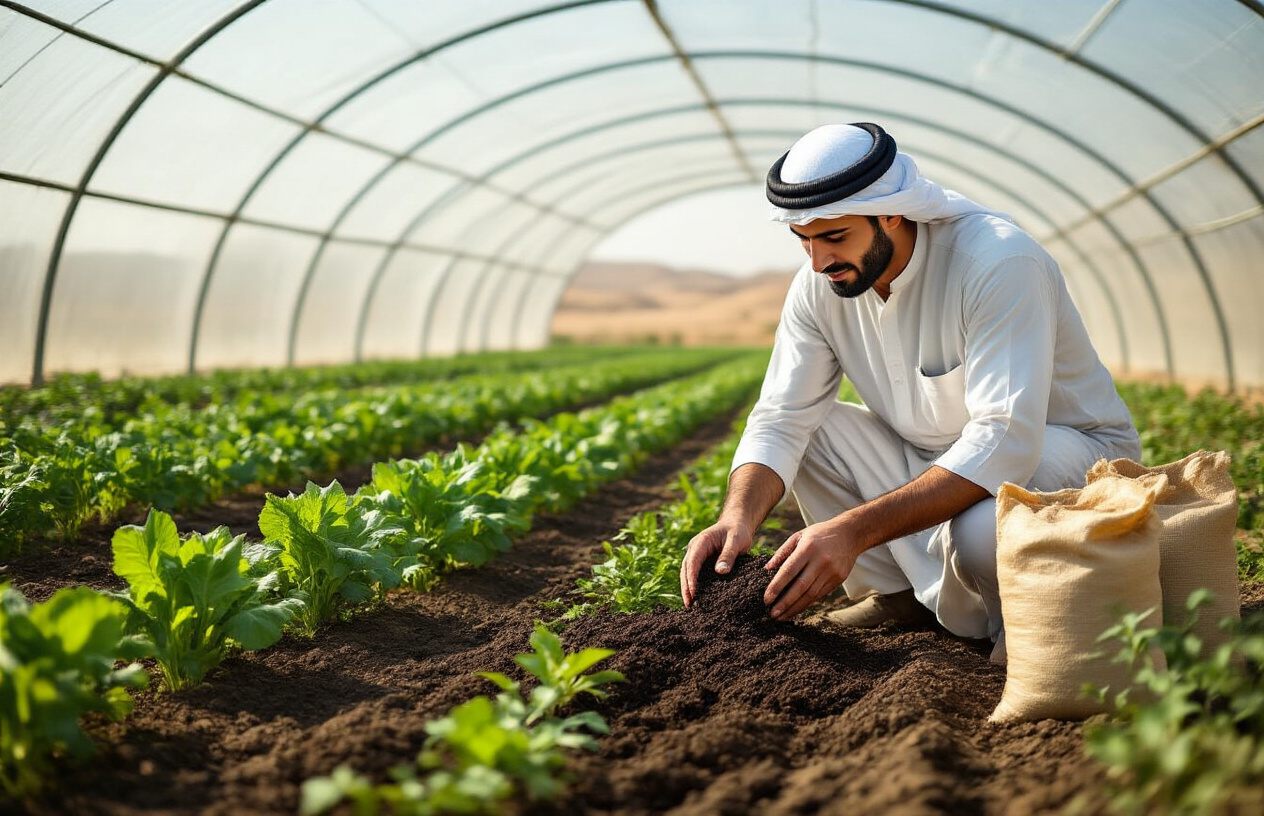
Transforming kitchen scraps and garden waste into nutrient-rich compost forms the backbone of successful organic farming GCC operations. Date palm fronds, a common agricultural byproduct in Gulf countries, make excellent carbon-rich material when shredded and mixed with nitrogen sources like food waste and livestock manure.
The key to quality compost in hot climates lies in maintaining proper moisture levels. Build compost piles in shaded areas and cover them with palm fronds or burlap to prevent rapid moisture loss. Turn the pile every two weeks to ensure proper aeration and prevent anaerobic conditions that create foul odors.
Coffee grounds from local cafes provide valuable nitrogen and slightly acidic pH that many crops prefer. Fish market waste, vegetable scraps from restaurants, and spent grains from local breweries create a diverse nutrient profile when properly composted together.
| Material Type | C:N Ratio | Best Use |
|---|---|---|
| Date palm waste | 80:1 | Carbon source |
| Kitchen scraps | 20:1 | Nitrogen boost |
| Coffee grounds | 20:1 | pH adjustment |
| Fish waste | 7:1 | Phosphorus rich |
Utilizing vermicomposting for concentrated nutrients
Red worms thrive in controlled environments, making vermicomposting perfect for organic fertilizers Gulf countries need. Set up worm bins in air-conditioned spaces or underground areas where temperatures stay below 85°F. The worms convert organic matter into concentrated castings that contain up to three times more nutrients than traditional compost.
Feed worms a steady diet of fruit peels, vegetable scraps, and paper products. Avoid citrus peels, onions, and meat products that can disrupt the pH balance. Harvest worm castings every three months by separating worms from finished compost using light exposure – worms naturally burrow away from bright conditions.
Worm tea, created by steeping castings in water for 24 hours, provides immediate nutrient availability for plants. Apply this liquid fertilizer weekly during growing seasons for maximum crop response.
Creating liquid fertilizers from seaweed and fish waste
Coastal access in GCC regions provides abundant seaweed resources for creating potent liquid fertilizers. Collect fresh kelp and brown seaweed after storms, avoiding any material that smells rotten or appears diseased. Rinse thoroughly to remove excess salt before processing.
Blend fresh seaweed with water at a 1:3 ratio and let it ferment for two weeks in covered containers. Strain the liquid and dilute 1:10 with water before applying directly to soil around plants. This seaweed extract provides natural growth hormones, trace minerals, and potassium that boost plant resistance to heat stress.
Fish waste from local markets creates nitrogen-rich fertilizer when properly processed. Bury fish scraps in dedicated compost bins or blend with water to create fish emulsion. The strong odor during processing makes this method best suited for rural locations away from residential areas.
Applying biochar for long-term soil improvement
Biochar transforms desert agriculture methods by creating permanent soil structure improvements that last decades. Produce biochar by slowly burning date palm waste, rice hulls, or coconut shells in low-oxygen environments using simple retort kilns.
The porous structure of biochar holds nutrients and water while providing habitat for beneficial microorganisms. Mix biochar with compost before application to charge it with nutrients – raw biochar can actually absorb nutrients from soil initially.
Apply biochar at rates of 5-10% by volume when preparing new growing beds. This one-time investment continues improving soil fertility for 20+ years while reducing irrigation needs by up to 30%. For established crops, work small amounts into the root zone during cultivation without disturbing plant roots.
Crop Selection and Timing for Optimal Results
Choosing Heat-Resistant Organic Varieties
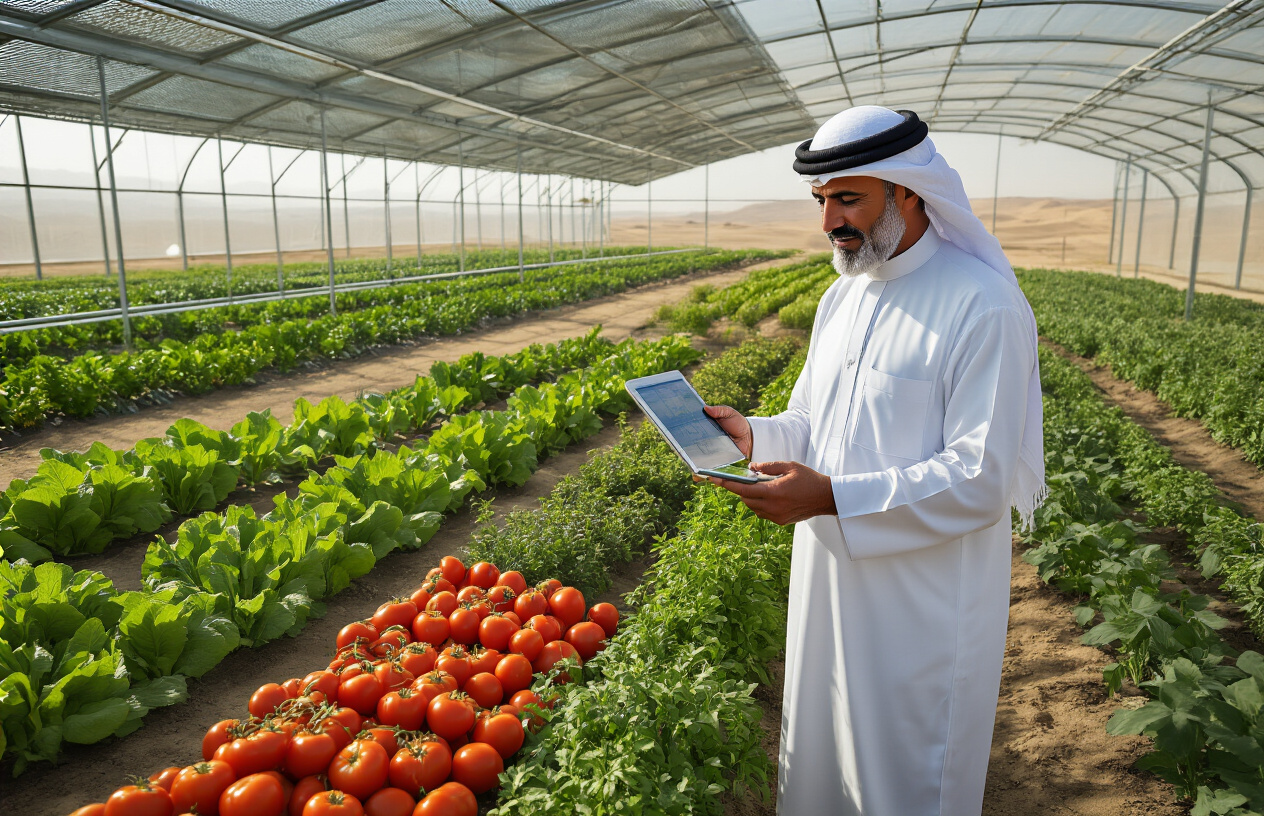
The secret to successful organic farming GCC lies in selecting crops that can handle extreme temperatures while maintaining high yields. Traditional varieties often struggle in the Gulf’s intense heat, but heat-resistant organic crops can thrive and produce exceptional harvests.
Date palms, okra, and eggplant top the list for GCC climate agriculture. These crops naturally tolerate temperatures exceeding 40°C while requiring minimal water compared to temperate alternatives. Cherry tomatoes bred for desert conditions can produce year-round when properly managed, delivering consistent organic crop production Gulf farmers can rely on.
Leafy greens like purslane and Malabar spinach offer surprising resilience. These nutrient-dense options continue growing through summer months when conventional lettuce fails completely. Heat-tolerant herbs including rosemary, thyme, and sage provide both culinary value and natural pest deterrent properties.
| Crop Category | Recommended Varieties | Heat Tolerance | Water Requirements |
|---|---|---|---|
| Vegetables | Desert-adapted tomatoes, okra | Up to 45°C | Low-moderate |
| Leafy Greens | Purslane, Malabar spinach | Up to 42°C | Low |
| Herbs | Rosemary, desert sage | Up to 50°C | Very low |
| Fruits | Figs, pomegranates | Up to 48°C | Moderate |
Local seed exchanges and agricultural research centers often provide region-specific varieties that have been adapted over generations. These heritage seeds frequently outperform imported alternatives and require fewer inputs to achieve maximum yields.
Planning Succession Planting Schedules
Smart timing transforms average harvests into extraordinary ones. Succession planting schedules maximize growing seasons by staggering plantings every 2-3 weeks, ensuring continuous harvests rather than overwhelming gluts followed by empty periods.
Cool-season crops work best during GCC’s mild winter months from November through March. Plant lettuce, spinach, and radishes in waves starting mid-October, with final plantings in early February. This approach extends harvest periods from 4 weeks to nearly 5 months.
Heat-loving plants like peppers and tomatoes benefit from early spring plantings in protected environments, then successive outdoor plantings as temperatures rise. Start seeds indoors during January, transplant to protected structures in February, and continue planting outdoors through April for extended production cycles.
Optimal Succession Schedule:
- Cool Season (Nov-Mar): Plant every 14 days
- Transition Period (Apr-May): Plant every 10 days
- Hot Season (Jun-Aug): Focus on heat-tolerant varieties every 21 days
- Recovery Period (Sep-Oct): Resume intensive planting every 14 days
Container growing allows year-round succession planting by moving plants to optimal microclimates. Mobile planters can shift from shade during peak summer to full sun during cooler months, maintaining consistent production schedules regardless of season.
Record keeping becomes essential for sustainable farming GCC operations. Track planting dates, varieties, and harvest yields to refine timing for following seasons. Digital calendars with automated reminders help maintain consistent planting schedules despite busy periods.
Maximizing Growing Seasons with Protective Structures
Protective structures extend growing seasons far beyond natural limitations, creating controlled microclimates that boost crop yields organically throughout the year. Simple shade houses reduce temperatures by 8-12°C while maintaining adequate light levels for photosynthesis.
Greenhouse tunnels using 50% shade cloth create ideal environments for heat-sensitive crops during summer months. These structures cost significantly less than full greenhouses while providing essential temperature control. Automated misting systems within these tunnels can reduce ambient temperatures by an additional 5-8°C through evapative cooling.
Structure Options by Season:
- Summer Protection: 70% shade cloth houses, evaporative cooling systems
- Winter Enhancement: Clear plastic tunnels, thermal mass water containers
- Year-Round: Retractable shade systems, convertible structures
- Wind Protection: Lattice screens, living windbreaks with fast-growing shrubs
Thermal mass techniques using water barrels or stone walls moderate temperature swings, keeping root zones stable during extreme weather. These passive systems work particularly well in desert agriculture methods where daily temperature variations can exceed 20°C.
Vertical growing systems within protective structures multiply planting space while improving air circulation. Trellises and tower gardens allow three-dimensional crop production, effectively tripling yields within the same footprint.
Season extension techniques like cold frames and row covers protect young seedlings during transition periods. These simple structures provide 3-5 degrees of frost protection while creating warm microclimates that accelerate growth rates during cooler months.
Strategic placement of protective structures considers prevailing wind patterns and solar angles throughout the year. Structures oriented to capture winter sun while blocking harsh summer rays create optimal growing conditions for extended seasons.
Boosting crop yields by 300% through organic methods in the GCC isn’t just a dream – it’s completely achievable when you understand your local climate and work with nature instead of against it. The key lies in mastering soil preparation, smart water management, and choosing the right crops for your specific conditions. When you combine proper timing with natural pest control and organic fertilization, you create a farming system that not only produces incredible results but also builds long-term soil health.
The beauty of organic farming in the GCC is that once you get these fundamentals right, your farm becomes more resilient and productive year after year. Start with one or two techniques that make the most sense for your situation – maybe focus on water management first, then gradually add other methods. Remember, successful organic farming is about patience and observation, but the payoff in both yield and soil quality makes every effort worthwhile.
Really great information 👍